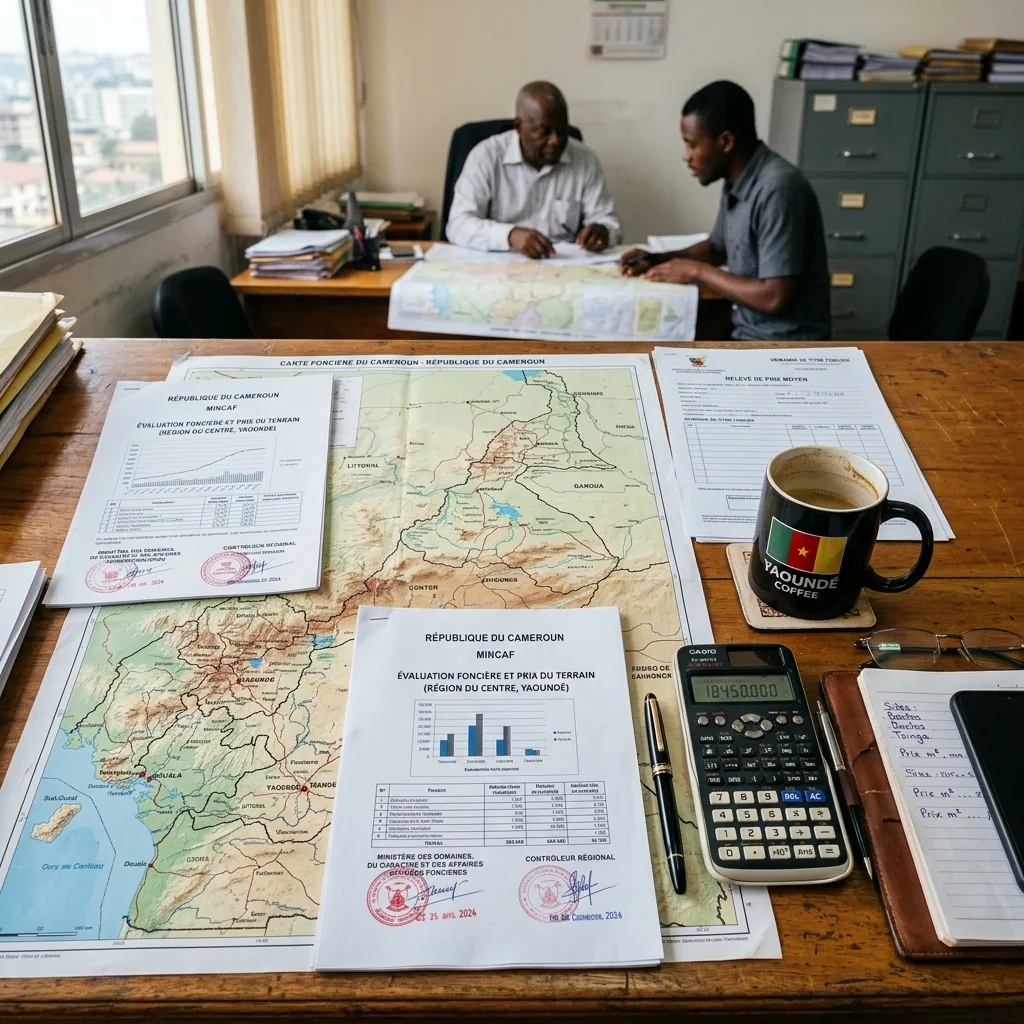
Which documents do you need and what steps should you follow to safely buy land in Cameroon? Notary, MINDCAF, taxes: the complete 2026 guide.
Buying land in Cameroon is a major investment, but it can also be an administrative maze if you don't know the right steps to follow. Between the documents to gather, the mandatory visit to a notary, and the registration in the Land Register, the process can seem complex. This guide walks you through the entire official procedure, step by step, so you can secure your purchase and become a legal owner with full peace of mind.
In Cameroon, a land sale is only legally valid once it is recorded in an authentic notarized deed and registered in the Land Register ("Livre Foncier") kept by the Land Registry (MINDCAF). A simple receipt or a private agreement never transfers ownership.
Step 1: Preliminary checks, before any commitment
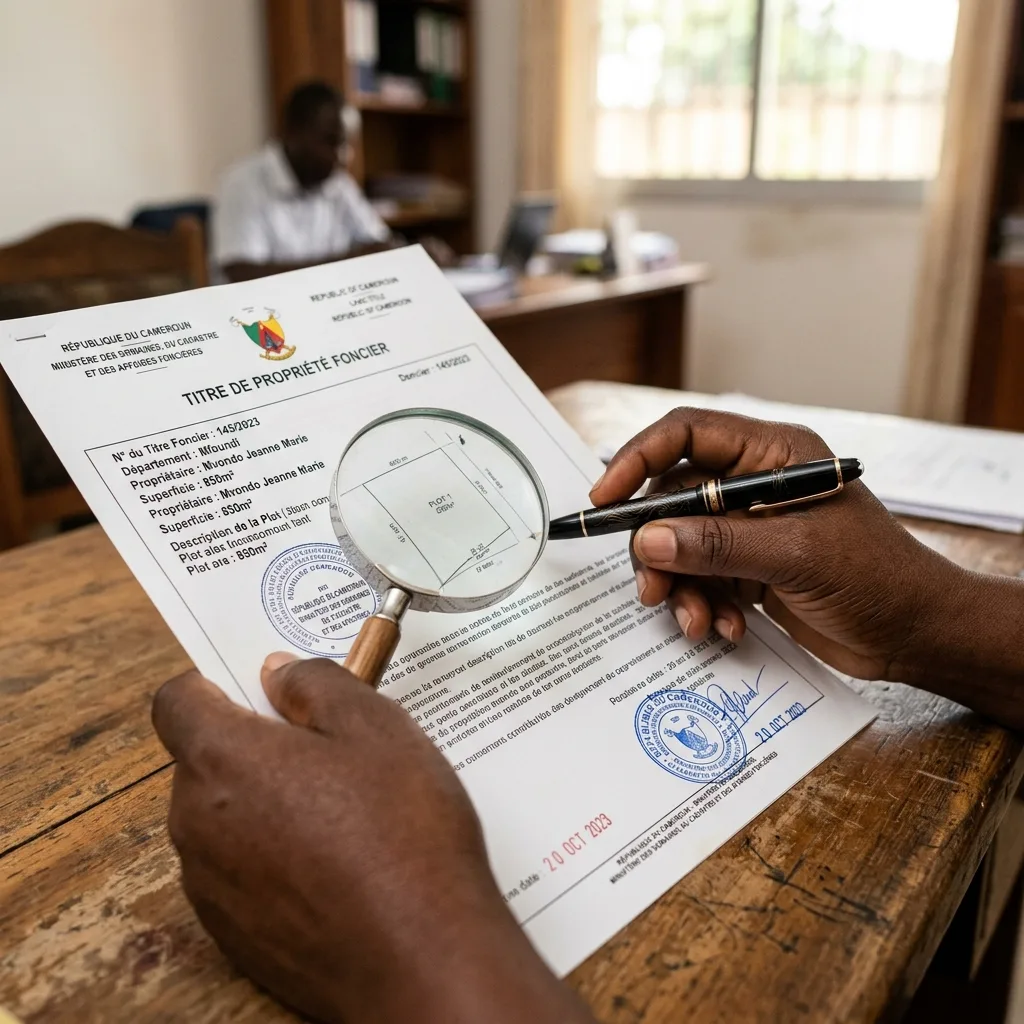
Before even discussing documents and signatures, the first step is to make sure the land actually exists, matches the title being presented, and is free of any dispute. Always request a recent Certificate of Ownership (less than 3 months old) from the Land Registry office covering the property's location, and have a licensed surveyor visit the site to confirm the boundaries.
We have dedicated a full guide to this essential step: how to verify the authenticity of a land title in Cameroon.
Step 2: Gather the required documents
Once the checks are done, both buyer and seller need to put together a complete file before meeting the notary.
Documents to request from the seller
- Original land title (or its duplicate if lost, issued by the Land Registrar).
- Certificate of Ownership less than 3 months old, confirming there is no mortgage, seizure, or pre-notation on the property.
- Cadastral plan / survey sketch attached to the title.
- Tax clearance certificate issued by the Tax Office, proving property taxes are up to date.
- Valid ID of the seller (national ID card or passport).
- If the land is jointly owned property: marriage certificate and the spouse's written consent.
- If the seller is represented by someone else: a notarized power of attorney.
Documents to prepare as a buyer
- Valid ID (national ID card, passport, or residence permit for foreigners).
- A recent proof of address.
- For diaspora buyers: a notarized power of attorney, legalized at a Cameroonian consulate or embassy, if you cannot be physically present.
- Proof of the origin of funds for large bank transfers, often requested by banks as part of anti-money-laundering checks.
Step 3: Signing the authentic deed with a Notary
Cameroonian law requires every real estate transfer to go through a notary: neither the buyer nor the seller can skip this step, regardless of the transaction amount. Choose your own notary rather than accepting the one suggested by the seller.
- The notary carries out a formal land request ("Réquisition Foncière") with the Land Registrar to confirm the exact legal status of the title before signing.
- They draft and have both parties sign the authentic deed of sale, the only document recognized to legally transfer ownership.
- Funds are usually paid into the notary's escrow account and released to the seller only once the transaction has been fully secured.
💡 Make it easy on yourself: Why start from a random listing when you can choose among plots already vetted by our legal team? Verified title, confirmed boundaries, a file ready for the notary: save yourself weeks of paperwork.
Step 4: Paying registration duties and taxes
Once the deed is signed, several mandatory fees must be paid before the transfer can be registered in the Land Register. The exact amount depends on the declared value of the property and the local district: your notary is best placed to give you a precise calculation before signing.
| Fee | Paid to | Calculation basis |
|---|---|---|
| Registration duties | Tax Office / Public Treasury | Declared market value of the land |
| Notary fees | Notary's office | Regulated scale, based on the sale amount |
| Land Register transfer fees | Land Registry (MINDCAF) | Flat fee + property value |
| Fiscal stamps | Tax office | Number of pages / deeds |
Step 5: Land request and registration in the Land Register
The notary then files the complete case with the relevant Land Registry. The Land Registrar carries out a final review of the file, then registers the transfer in the Land Register: the seller's name is removed and replaced with the buyer's. This registration, and this alone, is what makes the transfer of ownership enforceable against everyone.
Step 6: Collecting your new land title
Once the transfer is registered, a new land title is issued in your name. Delivery times generally range from a few weeks to a few months depending on the relevant Land Registry office and its workload. The document can be collected in person or through your notary.
Special case: buying land that isn't titled yet
Many plots in Cameroon are still part of the national domain and have never been registered. In this case, the procedure is different and longer: it involves a direct registration request submitted to the Minister of Land Affairs through the local Sub-Divisional Officer, review of the file by a Consultative Commission, a joint boundary survey with neighbors and traditional authorities present, and then a public notice period allowing objections, before the title is finally issued. It is strongly advised not to commit financially to this type of land without the guidance of a land professional.